What to do if Bromine Is Too High in the Hot Tub
Bromine is a popular sanitizer for hot tubs, especially effective in warm water. It works by ionizing impurities, which are then filtered out. However, excessive bromine levels can lead to several issues, such as skin irritation, a strong chemical smell, discoloration of swimsuits, and damage to hot tub components.

How to Check Bromine Levels
To monitor bromine levels:
-
Use a Chemical Testing Kit
These kits are readily available at pool and spa stores. Follow the instructions to test bromine levels accurately. -
Visit a Local Pool Store
Take a sample of your hot tub water to a professional for precise testing.
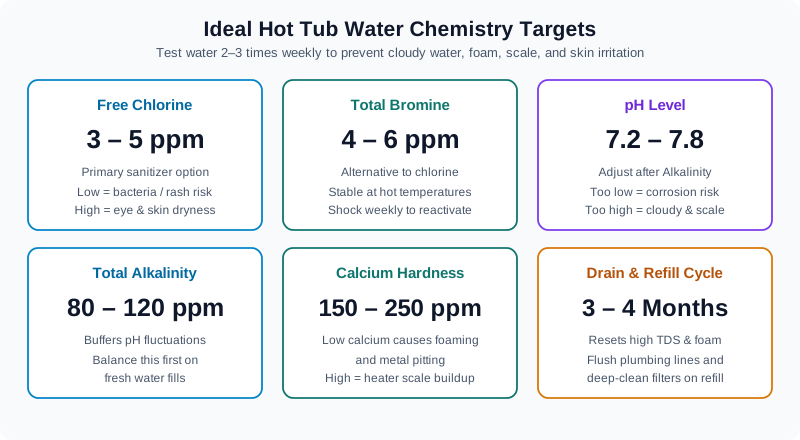
Ideal Bromine Levels: 3 ppm to 5 ppm. If the bromine is outside this range, corrective measures are necessary.
Steps to Lower High Bromine Levels
-
Let the Hot Tub Sit
Bromine naturally dissipates over time. Turn off any bromine dispensers and wait 1-2 days. Check levels every 12-15 hours. -
Open the Hot Tub
Remove the cover to expose the water to open air. This accelerates bromine evaporation and slightly reduces water volume. -
Dilute the Water
Add fresh water to the hot tub to reduce bromine concentration. Let the water cycle through the system before re-testing. -
Drain and Refill
If bromine levels remain stubbornly high, draining the hot tub and refilling with fresh water is the most effective solution. -
Use a Neutralizer
A neutralizer can quickly balance bromine levels. Use cautiously, as it can destabilize the water chemistry. Consult a professional before using.
Tips for Preventing High Bromine Levels
- Regular Testing: Check bromine levels weekly.
- Scheduled Maintenance: Run the hot tub filter daily, even on non-usage days, to maintain water circulation.
- Replace Old Components: Ensure all hot tub parts, such as filters, are functioning optimally.
- Avoid Overuse of Bromine: Follow manufacturer instructions on bromine usage to prevent over-sanitization.
Bromine Level Action Guide
| Bromine Reading (ppm) | Water Status | Recommended Action |
|---|---|---|
| 0 – 2 ppm | Under-sanitized | Add granular bromine shock/activator and open floater slightly |
| 3 – 5 ppm | Ideal soaking range | Safe to enter; maintain routine weekly testing |
| 6 – 9 ppm | Elevated | Remove floater, leave cover off 30–60 min with jets running, delay soaking |
| 10+ ppm | Too high for safe soaking | Do not bathe; remove floater, vent cover, partially drain & refill, or dose neutralizer |
Why Bromine Spikes Happen Suddenly
- Floater Dispenser Set Too Wide: Even one extra slot open on a floating bromine dispenser dissolves tablets rapidly in 102–104°F heated circulation.
- Adding Tablets Directly to the Skimmer Basket: High-velocity water flowing past skimmer tablets erodes bromine far faster than a floating diffuser and exposes pump seals to corrosive acidic water.
- Over-Shocking Activated Bromide: Adding non-chlorine oxidizer (MPS) converts spent bromide ions right back into active bromine. A double dose of shock can suddenly jump readings from 2 ppm past 10 ppm overnight.
When Is It Safe to Re-Enter After High Bromine?
Wait until reliable test strips or a liquid drop kit read 5 ppm or below (with pH steady between 7.2 and 7.8) before soaking. If you use sodium thiosulfate neutralizer, add only tiny half-teaspoon doses into running jets and retest after 20 minutes—adding too much neutralizer zeroes out sanitizer completely and prevents fresh bromine from holding for several days.
Switching away from heavy tablets? Compare low-chemical mineral sticks and oxidizing shock in our best hot tub sanitizer guide.
Conclusion
Balancing bromine levels is essential for a safe and enjoyable hot tub experience. Regular maintenance and monitoring are key to preventing excessive bromine levels. If you’re unsure about adjusting bromine or chlorine levels, consult a professional for guidance.
If your bromine levels still fluctuate after fresh filtration and shock balancing, feel free to contact our team for further help.