What Temperature Should a Hot Tub Be Set At
Soaking in a hot tub after a long day can relieve stress and tension. However, setting the correct temperature for your hot tub is essential to ensure comfort and safety. Whether for relaxation, therapeutic purposes, or accommodating unique health needs, determining the right hot tub temperature requires careful consideration.

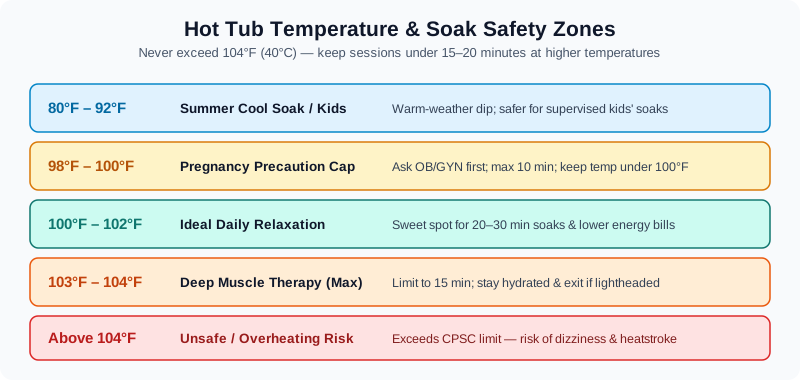
1) Depending on the Weather
The ideal hot tub temperature often depends on the season:
- Summer: Lower temperatures closer to body temperature (around 36–37°C or 96–99°F) provide a refreshing experience without overheating.
- Winter: Most people find a temperature of around 40°C (104°F) comfortable and relaxing. This is also the maximum temperature recommended by the Centers for Disease Control and Prevention (CDC) and U.S. Consumer Product Safety Commission for healthy adult soaking.
2) For Unique Cases
Special considerations are necessary for individuals with specific needs:
- Elders, pregnant women, or those with medical conditions should keep the temperature closer to body temperature (36–37°C or 96–99°F).
- Always consult a physician to ensure soaking in a hot tub is safe under these conditions.
3) Maintain a Constant Temperature
Maintaining a steady temperature has several benefits:
- Reduces wear and tear on the heating mechanism.
- Prevents sudden spikes in electricity bills.
- It’s more energy-efficient to maintain a consistent temperature than to reheat the water each time.
4) For Children
Extra caution is necessary when children are involved:
- Children under 5 years old should not use a hot tub.
- For children older than 5, keep the water temperature below 35°C (95°F) and limit their time in the hot tub to 5–10 minutes.
- Remove children from the tub immediately if they experience discomfort, cramps, or dizziness.
Hot Tub Temperature Reference Chart
Use this quick reference chart to pick a safe thermostat setting based on who is soaking, outside weather, and how long you plan to stay in the water:
| Use Case / Bather | Recommended Temp (°F) | Recommended Temp (°C) | Suggested Soak Limit |
|---|---|---|---|
| Summer Cool Soak | 85°F – 95°F | 29.5°C – 35°C | 30 – 45 minutes |
| Pregnant Women (With OB/GYN Approval Only) | Under 98°F – 100°F | 36.5°C – 37.8°C | Under 10 minutes |
| Children (Age 5+ Only) | 90°F – 95°F | 32°C – 35°C | 5 – 10 minutes |
| Everyday Comfort & Seniors | 100°F – 102°F | 37.8°C – 38.9°C | 15 – 25 minutes |
| Deep Muscle Therapy (Maximum Safe Limit) | 103°F – 104°F | 39.4°C – 40°C | 15 – 20 minutes max |
How 110V vs. 240V Wiring Affects Water Temperature
Your hot tub’s electrical setup determines how reliably it holds target temperatures during soaking:
- 110V/120V Plug-and-Play Spas (1.0–1.5 kW heater): Because jets and heater usually cannot run at full power simultaneously, water may cool by 2–4°F during a 20-minute winter soak. Setting your thermostat to 103–104°F before entering offsets that drop. See our 120V vs. 240V comparison.
- 220V/240V Hardwired Spas (4.0–5.5 kW heater): Keep the heater active while therapy pumps run, maintaining a steady 101–104°F even in freezing air temperatures.
Energy-Saving Thermostat & Calibration Tips
- Check Accuracy With a Floating Thermometer: Spa thermistor sensors can drift 1–3°F over time. Verify top-panel readings with an independent digital or glass floating thermometer before trusting 104°F settings.
- Use Economy or Sleep Modes for Rare Use: If you only soak on weekends, lowering the setpoint by 5–8°F reduces standby loss—provided you have an intact insulated hard cover. In sub-freezing weather, never switch off freeze protection or turn the heater off completely unless the tub is drained and winterized.
- Mind Pump Friction Heat in Summer: Even with the heater turned down, long filtration cycles add pump friction warmth inside well-insulated cabinets. Shorten filtration hours slightly during heatwaves and prop the cover slightly to let excess heat escape.
Frequently Asked Questions
What happens if a hot tub goes above 104°F?
Temperatures above 104°F (40°C) sharply increase risks of heat exhaustion, dizziness, fainting, and dangerous core body hyperthermia. Most U.S. spas lock maximum thermostat settings at 104°F by UL safety code.
Why is 100–102°F considered the sweet spot?
At 100–102°F, water feels noticeably warmer than normal 98.6°F skin temperature without forcing rapid overheating, allowing longer 20–30 minute evening soaks for most healthy adults.
Should I turn my hot tub down between uses?
For daily soakers, keeping a steady setpoint (100–102°F) uses similar or less energy than reheating cold water from scratch—especially on slower 110V heaters.
Conclusion
Finding the right hot tub temperature depends on personal preferences, safety considerations, and environmental factors. While the standard recommended temperature is 40°C (104°F), adjustments should be made for vulnerable individuals or specific situations. Experiment within safe ranges to discover what works best for you and your family.
For questions about safe soaking temperatures, energy-saving thermostat settings, or winter freeze protection, feel free to contact our team.