What Is a Plug and Play Hot Tub?
A plug and play hot tub is a type of hot tub that operates on a standard 110V electrical outlet, eliminating the need for additional wiring or electrical modifications. Unlike hardwired hot tubs, which often require professional installation and dedicated power connections, plug and play hot tubs are easy to set up and highly portable.

Advantages of Plug and Play Hot Tubs
-
Low Initial Costs
- No need for a dedicated power supply or professional installation.
- Setup costs are significantly reduced.
-
Quick Set-Up
- Fill the hot tub with water using a garden hose, add necessary chemicals, and plug it in. Heating takes approximately 24 hours.
-
Portability
- Lightweight and easy to transport, making it ideal for renters or those planning to relocate.
-
Ideal for Small Families
- Perfect for 2-4 people, offering hydrotherapy benefits in a compact size.
-
Low Maintenance
- Easier to clean and maintain than hardwired models. Components are simple to replace if needed.
Disadvantages of Plug and Play Hot Tubs
-
Smaller Pump and Heater
- Lower power output limits jet pressure and extends water heating time.
-
Heat Loss in Cold Weather
- Heats slower in colder temperatures and loses heat quickly due to the smaller heater.
-
Longer Heating Times
- Can take up to 24 hours to heat fully, potentially increasing electricity bills.
-
Limited Size
- Typically designed for smaller groups, making it less suitable for large families or parties.
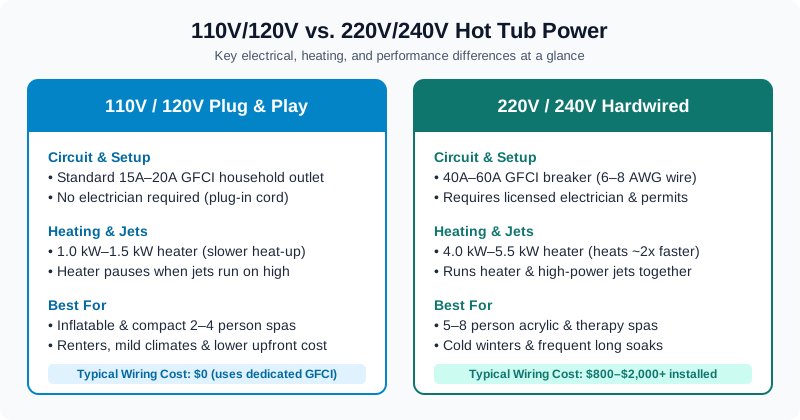
110V Plug-and-Play vs. 240V Hardwired Specs
| Specification | 110V / 120V Plug & Play | 220V / 240V Hardwired Spa |
|---|---|---|
| Circuit Breaker | 15A or 20A standard GFCI outlet | 40A – 60A dedicated GFCI disconnect |
| Typical Heater Size | 1.0 kW – 1.5 kW | 4.0 kW – 5.5 kW |
| Heating Speed | 1°F – 2°F per hour | 3°F – 6°F per hour |
| Jets + Heater Simultaneously | Usually no (heater pauses on high jets) | Yes (full heat maintained with jets on) |
| Electrician Installation | Not needed if dedicated outlet exists | Required (typically 0 – ,500+) |
Outlet, Breaker & GFCI Rules for Plug-and-Play Spas
Even though a 120V hot tub uses a standard three-prong household plug, it draws continuous high amperage—often 12 amps to 15 amps during heating cycles:
- Use a Dedicated Circuit: Never share the spa outlet with garage freezers, patio space heaters, or landscape lighting, or you will nuisance-trip the breaker.
- Never Use an Extension Cord: Standard extension cords overheat under sustained spa draw, create voltage drop that damages heater relays, and void manufacturer warranties. Plug the built-in 10–15 ft integrated GFCI cord directly into a weather-resistant receptacle.
- Test the Integrated GFCI Monthly: Press the TEST and RESET buttons on the cord’s GFCI plug before every few soaks to verify ground-fault protection triggers immediately.
Can a Plug-and-Play Hot Tub Be Converted to 240V Later?
Many rotomolded and compact acrylic plug-and-play spas (such as convertible Aquarest, Lifesmart, and Essential Hot Tubs models) include dual-voltage control packs. While they ship wired for 120V/15A operation, a licensed electrician can convert the pack jumper and install a dedicated 240V/40A or 50A GFCI line later—instantly upgrading heating speed to 4 kW output and keeping the heater active when high jets run.
Ready to compare specific models? Browse our top plug-and-play hot tub reviews or cold-climate 110V options.
Frequently Asked Questions
How long does a 110V plug-and-play hot tub take to heat from cold?
Expect 18 to 30 hours depending on water capacity (200–350 gallons) and starting tap water temperature. Keeping the insulated spa cover latched cuts heat-up time substantially.
Are inflatable hot tubs considered plug-and-play?
Yes. Inflatable spas run on 110V/120V outlets, though hard-shell rotomolded plug-and-play spas offer better cabinet insulation, permanent sculpted seating, and longer multi-year durability.
Conclusion
Plug and play hot tubs are an excellent choice for individuals seeking an affordable, portable, and easy-to-maintain hot tub solution. While they may have limitations in power and size, their convenience and cost-effectiveness make them ideal for small families, renters, and occasional users.
Who Should Consider a Plug and Play Hot Tub?
- Renters or people who plan to move frequently.
- Small households looking for an economical hot tub.
- Those who primarily use the hot tub in warmer months.
Got questions about plug-and-play spas? Visit our Contact Us page and our team will gladly help.