What Happens If You Stay In a Hot Tub too Long?
Soaking in a hot tub is a great way to relax, but staying in a hot tub for too long can lead to serious health problems. Experts recommend limiting your time in a hot tub to 20–30 minutes, especially when the water temperature is between 100–104°F. Extended exposure to high temperatures can cause dehydration, dizziness, nausea, and in extreme cases, more severe health complications.

What Happens to Your Body in a Hot Tub?
The human body has a core temperature of 98.6°F. Sitting in a hot tub raises your core temperature, which can lead to the following effects:
- Feverish State: Elevated core temperature may cause dizziness and nausea.
- Dehydration: The body sweats to cool down, but you may not notice this while immersed in water.
- Low Blood Pressure: Heat causes blood vessels to dilate, making the heart work harder to pump blood.
These effects can be intensified the longer you stay in the hot tub.
Symptoms of Staying Too Long in a Hot Tub
If you notice any of these symptoms, it’s time to exit the hot tub immediately:
- Dizziness
- Fever
- Confusion
- Breathlessness
- Skin irritation or a burning sensation
- Vomiting
- Dehydration
How to Safely Enjoy a Hot Tub
Follow these tips to stay safe while enjoying your hot tub:
1) Limit Your Time
- Use a timer to ensure you don’t exceed 20–30 minutes in the hot tub.
2) Stay Hydrated
- Drink water to counteract dehydration caused by the heat.
3) Monitor Water Temperature
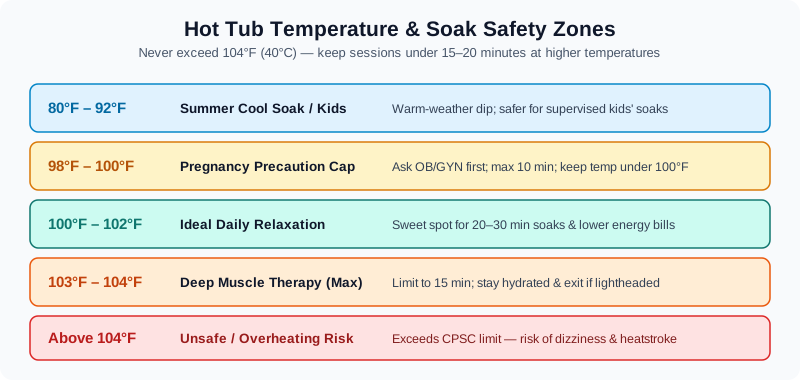
- Keep the hot tub temperature at a comfortable level, typically between 100–102°F.
4) Use a Timer for Heat Regulation
- Opt for a hot tub with built-in timers that reduce water temperature after a set period.
5) Sit Partially in the Water
- Avoid full immersion to allow your body to dissipate heat effectively.
Precautions for Specific Groups
-
Pregnant Women and Children:
Children under five should avoid hot tubs entirely. Pregnant women should consult a physician before using a hot tub, as high temperatures can be harmful. -
People with Medical Conditions:
Those with heart problems, blood pressure issues, or skin conditions should seek medical advice before using a hot tub.
Safe Soaking Time by Water Temperature
Your safe soak limit drops rapidly as thermostat settings approach the 104°F maximum:
| Water Temperature | Healthy Adult Soak Limit | Key Physiological Effect |
|---|---|---|
| 104°F (40°C Max) | 10 – 15 minutes | Rapid core heating, brisk pulse rise, high sweating loss |
| 100°F – 102°F | 15 – 30 minutes | Comfortable muscle relaxation with gradual core rise |
| 95°F – 98°F | 30 – 45 minutes | Near skin/core neutral; gentle relief with lower strain |
| Below 95°F (Cool Soak) | 45+ minutes | Cooling summer comfort without overheating risk |
Hidden Risks: Alcohol & Orthostatic Blood Pressure Drops
- Never Combine Alcohol and 100°F+ Soaking: Both alcohol and hot water dilate peripheral blood vessels and dull drowsiness warnings—sharply raising risks of fainting, falls on wet steps, and drowning.
- Sit on the Step Before Exiting Completely: Because blood pools toward warmed extremities, standing up abruptly inside a hot tub can trigger sudden lightheadedness. Sit at the cool top edge with your legs still in the water for 60 seconds before climbing out on sturdy slip-resistant spa steps.
- Rehydrate and Cool Gradually: Drink a full glass of cool water afterward and review safe thermostat levels in our hot tub temperature guide.
Conclusion
Moderation is key to enjoying the benefits of a hot tub safely. Limit your time, monitor water temperature, and stay hydrated to avoid any adverse effects. Always have someone nearby while soaking to assist if needed.
With these precautions, you can maximize the relaxation and health benefits of your hot tub experience while staying safe.
If you have questions about safe soaking times or temperature guidelines, feel free to contact our team.